The garden vision pulls together the garden goals, garden design style, and site inventory and analysis. The previous steps helped you to develop goals and understand your site. Now you can compile that information together into a garden vision. This acts as a checklist for your design.
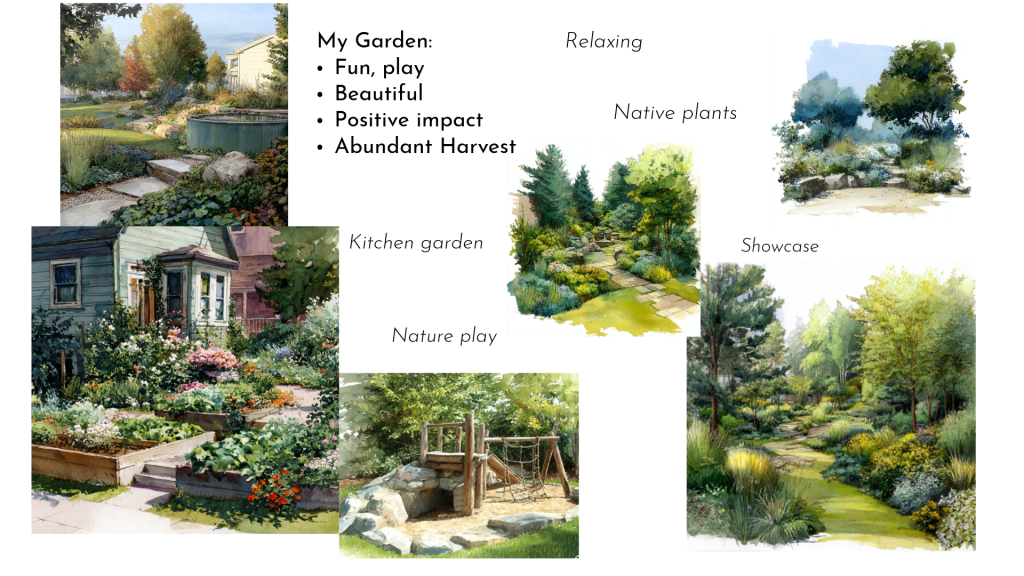
You can compile this into a vision board or use the linked form below. Feel free to get creative: this can serve as inspiration throughout the process of design, landscaping, and gardening.

Compile Garden Goals
First, go through your garden goals and compile those goals into a succinct list. It is helpful to combine things together into larger groups or projects. You can combine these into spatial groups of things that will be nearby each other, projects that will be done at the same time, or things done in a similar manner.
To facilitate unique design options, you can also engage in the permaculture concept of random assembly. List out your desired components, and start pairing them together to see if they mesh. Some components can clearly match up, for example: a swimming area and water feature, nature play and a pollinator garden, or a greenhouse with rain collection.
Other unique combinations might arise: chickens paired next to an outdoor kitchen to facilitate interaction with the chickens and the disposal of food scraps. You could have a clothes line next to a kitchen garden because both require frequent visits and full sun. Use your own desires to create unique combinations.
You can next add to this list any needed requirements they will need on the ground. For example, a kitchen garden area needs full sun, good soil, no steep slopes, close to home, and is an area to highlight. A hot tub and patio area will need a flat space with privacy and a minimum size of 200 sq. feet.
At the end, you should have a list of grouped design components that will then go into the landscape design. You can also prioritize this list so you can focus on the most important things.
Compile Site Analysis
From the site analysis, create a list of all the problems you need to fix, the things you want to keep and highlight, and any other requirements that you’ve identified. You can also identify gaps that you see when you compile your garden goals with their requirements: i.e., you might want to add more shade, create a flat area, or restore a native plant area.
Finish by Adding your Unique Elements
The final items to add to your design vision are a description of your specific design style, precedent images you would like to emulate, and any other notes that describe what you want in your garden. This is a good time to study precedent images and really identify what you like about them: do you want evergreens or white flowers, do you like the feeling of a wild garden, or do you want an open feel to your landscape, etc.
Don’t forget to balance your ideal look with your ideal lifestyle. You might like the look of a certain garden, but it could take a lot of maintenance and cost. Your ideal lifestyle might not include the time and money needed to create that garden. Be realistic with what you can achieve, and be sure it fits into your broader goals for your life.
This process can help you be excited and passionate about your garden. It’s good to compile the problems you need to solve, but don’t forget to add the vision of where you want to be. Add the details that will make your garden something you enjoy and that you will be proud of.
 Responsive Gardens